

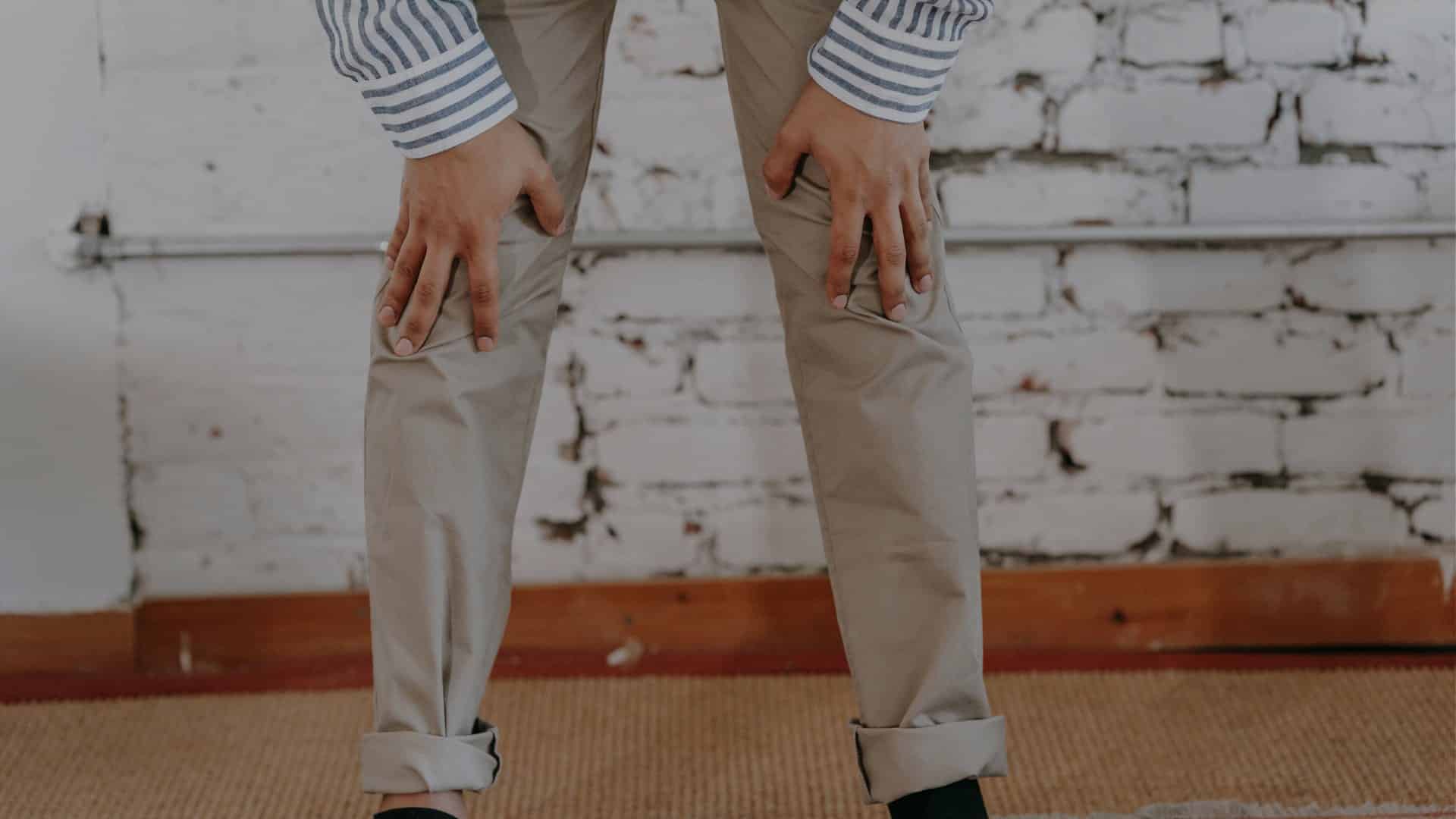
What does it really mean to have a locked knee?
A locked knee This can correspond to a mechanical inability to extend the joint, a limitation caused by pain, or stiffness related to swelling. The context of onset and associated symptoms allow for an assessment of the degree of urgency and the selection of necessary examinations.
The expression locked knee This term is used to describe several situations. Some patients are no longer able to fully straighten their leg. Others can still perform the movement, but the pain is so intense that they spontaneously keep their knee in a slightly flexed position.
It is therefore necessary to distinguish between two situations:
- The genuine mechanical lock : an obstacle located in the joint physically prevents movement.
- The pseudo-blockage : movement remains theoretically possible, but it is limited by pain, swelling or a reflex muscle contraction.
A mechanical blockage often gives the impression that something is stuck inside the knee. Extension or flexion stops abruptly, as if the movement has encountered a stop.
Conversely, a very painful or swollen knee may appear locked without any fragment actually being displaced. It is difficult to differentiate without a clinical examination. specialized knee consultation allows us to specify the missing movement, the location of the pain and the possible presence of a mechanical obstruction.
Can a meniscus tear cause a blockage?
The menisci are two fibrocartilaginous structures located between the femur and the tibia. They participate in the load distribution, to shock absorption and joint stability.
During a twisting motion, A portion of the meniscus can tear. Some lesions remain stable and primarily cause pain. Others become mobile and can shift within the joint.
A so-called «"in a bucket handle"» This can prevent the knee from regaining its full extension. The patient may then present with:
- pain that appeared after a pivot or a twist;
- a cracking sound at the moment of the trauma;
- swelling in the following hours;
- a catching sensation;
- an inability to fully straighten the leg.
A locked knee After a twisting injury, a search for a displaced meniscal tear is therefore warranted. The page dedicated to lesions of the meniscus and cartilage presents the main symptoms that can accompany this type of trauma.
However, not all meniscal tears require intervention. The course of action depends on the type of tear, its location, whether it is stable or displaced, and the overall condition of the cartilage.
What are the other possible causes?
The meniscus is not the only structure that can cause a locked knee. A fragment of cartilage or bone can sometimes become mobile within the joint. This is then referred to as... loose body in the joint.
This fragment can shift and cause intermittent episodes: the knee functions normally, then suddenly locks in a position. Changing position can sometimes temporarily release the movement, without addressing the underlying cause.
The main possible causes include:
- a displaced meniscal lesion;
- a fragment of cartilage after trauma;
- an osteochondral fracture affecting the cartilage and bone;
- a dislocation or instability of the kneecap;
- a significant joint effusion;
- an inflammatory flare-up related to osteoarthritis;
- more rarely, an abnormality of the synovial membrane.
After a fall or significant impact, a fracture should be specifically investigated if the patient is unable to bear weight. Deformity is not always present, and some bone lesions can be difficult to identify without imaging.
How to recognize a pseudo-blockage?
A pseudo-lock occurs when pain, fear of movement, or muscle tightness prevents the patient from moving their knee normally. It can occur after a sprain, a bruise or the appearance of an effusion.
The patient may sometimes gradually regain some extension when lying down and relaxed. The movement remains painful, but it does not always encounter a complete stop.
Certain factors may point towards a pseudo-blockage:
- the amplitude varies according to the position;
- The limitation increases when the pain is stronger;
- the movement improves slightly at rest;
- the knee is very swollen;
- no sensation of a specific obstacle is felt.
This distinction should not, however, lead to forcing the knee. Attempting to abruptly unlock the joint can intensify the pain and worsen an existing injury.
What signs require prompt medical attention?
A locked knee It should be evaluated promptly when it persists, particularly after a twisting motion or sports injury.
A prompt consultation is also recommended if any of the following signs are present:
- inability to bear weight on the leg;
- very rapid or significant swelling;
- visible deformity of the knee;
- intense pain that does not lessen with rest;
- marked sensation of instability;
- deep wound near the joint;
- fever associated with a red and hot knee;
- cold, pale, numb or difficult to move foot.
A red, hot, and very painful joint accompanied by fever may suggest an infection. This situation requires urgent evaluation, particularly after an injection, surgery, or injury.
What should I do immediately while waiting for medical advice?
When a locked knee If the joint appears after activity or injury, it is best to stop the effort immediately. Avoid repeated rotational movements or attempts to reposition the joint yourself.
While awaiting further advice, a few simple measures can be implemented:
- protect the knee and limit the pressure if it is painful;
- use crutches if they are available and properly adjusted;
- apply cold through a fabric for a short period of time;
- elevate the leg at rest;
- use light compression if it remains comfortable;
- keep the knee in the least painful position.
Compression should be removed if it causes numbness, increased pain, or a change in foot color. Excessively tight, homemade immobilization is not recommended.
Regarding medication, it is best to adhere to the treatments usually prescribed. Anti-inflammatory drugs are not suitable for everyone, particularly in cases of digestive, kidney, or cardiovascular disease, anticoagulant therapy, or allergies.
What tests can identify the cause?
The clinical examination is the first step. It allows for analysis of the mechanism of injury, the location of the pain, the swelling, and the remaining range of motion.
The imaging technique is then chosen according to the suspected lesion:
- The X-ray primarily looking for a fracture, dislocation or bone injury.
- L'MRI studies the menisci, ligaments, cartilage and subchondral bone.
- The scanner provides a detailed analysis of certain fractures.
- L'ultrasound examine especially the tendons and superficial structures.
MRI is particularly useful when a displaced meniscal tear is suspected. However, it is not always necessary before a clinical examination. The page dedicated to knee imaging and the various available examinations allows for a better understanding of their respective indications.
A locked knee Therefore, this should not directly lead to a request for a specific examination. The choice depends on the mechanism, age, symptoms, and clinical findings.
Does a blockage mean that surgery is necessary?
No. The treatment depends on the actual cause of the blockage.
A pseudo-blockage caused by pain or swelling may improve with conservative management including activity adjustments, symptomatic treatment, and a gradual return of mobility.
Some stable meniscal tears can also be treated without surgery. Rehabilitation then aims to reduce pain, restore range of motion, and strengthen the muscles that contribute to knee stability.
However, intervention may be considered when a traumatic and displaced meniscal fragment permanently prevents extension. When surgery is indicated, the goal is to preserve the meniscal tissue as much as possible. The role of the intervention and the different possibilities are explained in the Coulin Medical article dedicated to the Meniscus surgery and its indications.
Arthroscopy can be used to observe and treat certain lesions using a camera and instruments inserted through small incisions. However, this technique should not be automatically recommended for every meniscal pain. You can find further information on knee and hip arthroscopy.
Why preserve the meniscus as much as possible?
The meniscus helps distribute pressure between the femur and tibia. Removing a significant portion of this tissue can increase the stress on the cartilage.
When intervention is necessary, several factors are therefore evaluated:
- the shape of the tear;
- its location;
- the quality of the fabric;
- its healing potential;
- the patient's age and activity level;
- the condition of the cartilage;
- the presence of other lesions.
Suturing may be considered when the lesion presents favorable characteristics. In other situations, only the unstable and irreparable portion is removed. The strategy is always individualized.
Frequently Asked Questions
My knee is stuck in a bent position: what should I do?
Do not force your leg to straighten. Rest your knee, apply ice, and avoid putting full weight on it. A true locking of the knee (inability to fully straighten it) is often due to a fragment of the meniscus trapped in the joint: it should be examined promptly.
Locked knee after a fall: is it an emergency?
Yes. A blockage that appears after a fall or a twist requires a quick consultation, if possible on the same day: it could be a torn meniscus, a ligament injury, or a fragment of bone or cartilage.
Can the knee unlock itself?
Sometimes, yes: the knee «unlocks» with a movement, then locks again later. Even if the locking disappears, the underlying cause remains. A consultation is recommended to avoid further damage to the meniscus or cartilage.
In a true locking of the knee, the knee cannot fully extend, even with assistance. In a pseudo-lock, it is pain that prevents movement. Only a medical examination, sometimes supplemented by an MRI, can differentiate between the two.
Is surgery always necessary for a locked knee?
No. A true locking due to a displaced meniscus often requires arthroscopy, which aims to repair the meniscus rather than remove it. A pseudo-lock is most often treated without surgery (rest, physiotherapy).
Is it possible to drive with a locked knee?
This is not recommended: a knee that does not fully extend does not allow for safe braking. Bring someone with you to your appointment, or call the [phone number/email address]. 022 348 80 00.
Need a quick opinion in Geneva? Make an appointment or call the 022 348 80 00.
Conclusion
A locked knee This can be caused by a displaced meniscal tear, a loose body, significant swelling, or pain-related limitation. The symptom does not automatically mean that surgery will be necessary, but it should not be dismissed if it persists.
After a sprain, especially if the knee cannot be straightened, a specialist evaluation can distinguish between a true mechanical obstruction and a pseudo-locking. The choice between X-ray, MRI, and CT scan then depends on the suspected injury.
While awaiting examination, it is best to protect the joint, limit weight-bearing if necessary, and avoid attempting to free it with forced movements. Treatment is determined based on the diagnosis, the condition of the cartilage, and each patient's individual situation.


How can I tell if my knee is truly locked?