


What is a knee plica?
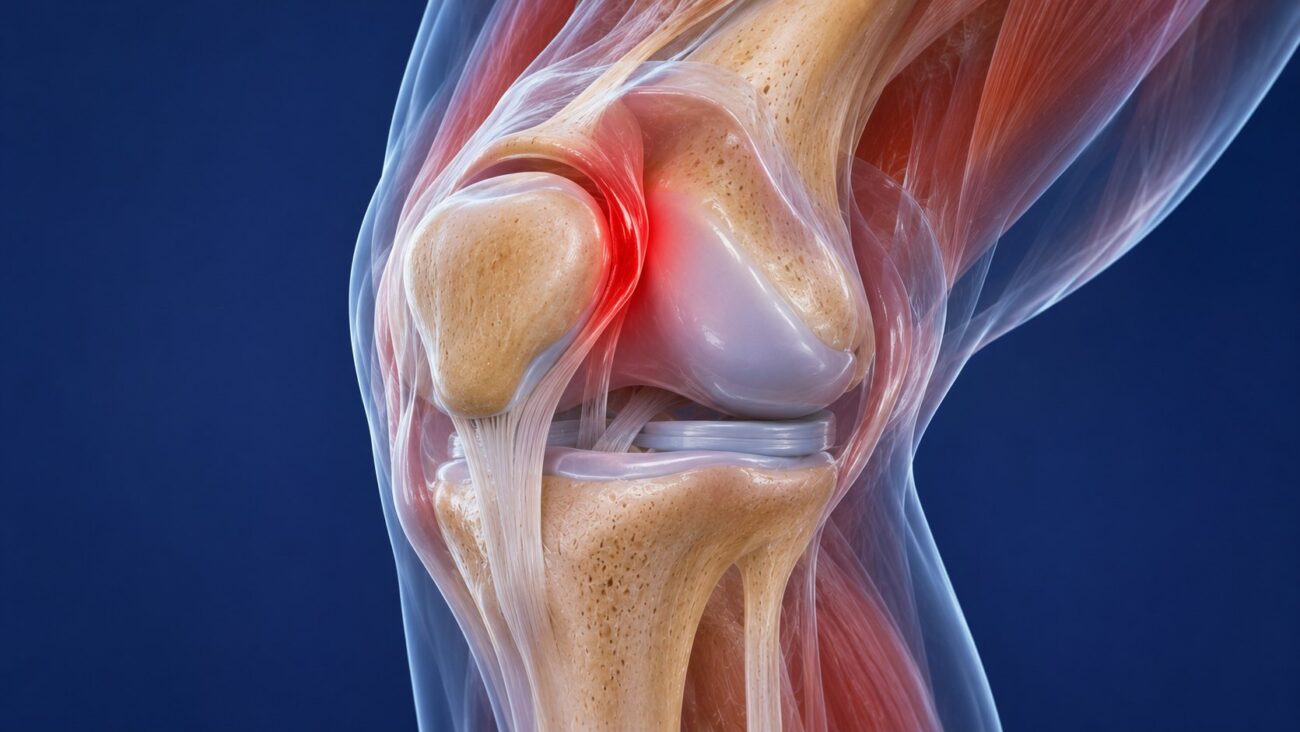
A plica of the knee is a fold of the membrane lining the inside of the knee (the synovium). These folds are remnants of knee development before birth. Many people have one, most often on the inner side of the kneecap, without ever knowing it.
This is called plica syndrome When this fold thickens and becomes irritated, it rubs against the femur with each bend of the knee and becomes painful.
There are several possible plicas: above the kneecap, on the inner side, or, more rarely, on the outer side. The inner plica, also called the mid-patellar plica, is by far the most problematic, as it lies in the path of the femur when the knee bends.
Why does the plica of the knee become painful?
Several situations can irritate the plica of the knee:
- of the repeated bending cycling, running, rowing, stairs, squats;
- a sudden increase in activity : resumption of sports, new training program;
- a direct blow on the inner side of the knee;
- knee irritation related to another injury (meniscus, cartilage).
The syndrome primarily affects young adult athletes: runners, cyclists, footballers, or dancers, who bend and straighten their knees thousands of times per session. It can also appear after a direct blow to the front of the knee, or after a period of immobilization that has reduced the elasticity of the joint.
Due to repeated friction, the plica of the knee becomes inflamed, swollen, and loses its flexibility. It thickens, sometimes becoming fibrous, and grips the femur more tightly with each movement. A vicious cycle can then develop: the more irritated it is, the more it rubs, and the more pain it causes. This is why it is important to act early, by reducing the load before the plica thickens permanently.
Symptoms of plica syndrome
The most common symptoms are as follows:
- pain at the front and on the inner side of the knee, above the joint line;
- discomfort that increases when climbing stairs, squatting, or after sitting for a long time;
- a small jolt, a click or a sensation of a «cord» rolling under the fingers when bending the knee;
- Sometimes a slight swelling, but no real blockage or instability.
These signs closely resemble those of the patellofemoral syndrome or a meniscus tear, This explains why plica is often diagnosed late.
The pain is often more pronounced at the end of the day or the day after a workout. It generally remains well localized: you can point it out, on the inner edge of the kneecap.
How to diagnose a plica of the knee?
The diagnosis relies primarily on examination: the doctor looks for a painful cord by rolling their fingers along the inner side of the knee, with the knee slightly bent.’MRI may show a thickened plica, but it mainly serves to rule out other causes, particularly a lesion of the meniscus or cartilage.
The doctor compares the two knees and checks for signs of another injury: locking, instability, significant swelling, or pain in the joint space. An X-ray is sometimes taken to ensure the bone and kneecap are normal. Plica syndrome is often a diagnosis of exclusion: it is considered when the examination is typical and other causes have been ruled out.
What treatment?
1. Conservative treatment, effective in the majority of cases
For a plica of the knee, this treatment relies on a few simple measures:
- reduce temporarily activities that bend the knee a lot (uphill cycling, deep squats, repeated stair climbing);
- cold after the effort to calm the irritation;
- physiotherapy : hamstring and quadriceps stretching, progressive thigh strengthening, correction of sports movement;
- adapt your equipment : a bicycle saddle that is too low increases flexion and irritation.
For a stubborn knee plica, an injection may be offered if the pain persists despite a few weeks of rehabilitation.
2. Arthroscopy, as a last resort
When the pain persists despite several months of well-conducted treatment, the knee plica can be removed by arthroscopy, a minimally invasive procedure. A return to sport is generally possible in about four to six weeks.
How long does it take to heal?
With conservative treatment, the pain of a knee plica usually improves in six to eight weeks. After arthroscopy, walking resumes within a few days and sports activities in about four to six weeks, depending on the activity.
These recovery times depend largely on the regularity of the exercises and the adaptation of activities during the painful phase. Resuming too soon and too intensely risks a relapse, as a still-irritated plica easily becomes inflamed again.
The recovery process is gradual: first walking and cycling without resistance, then running on flat terrain, and finally sports involving jumping or deep bending. Pain that recurs during or after the effort indicates that the progression needs to be slowed down.
When to consult a doctor?
It is advisable to consult a doctor in the following situations:
- the pain lasts more than three to four weeks despite the reduction in activities;
- the knee locks or gives way (this is not typical of a plica and should prompt investigation for another injury);
- significant swelling appears.
You can make an appointment in Geneva for an assessment.
A consultation also confirms that it is indeed a plica of the knee: in a young athlete, pain at the front of the knee can have other causes, such as patellar cartilage damage or a meniscus tear, which are not treated in the same way. An accurate diagnosis avoids weeks of inappropriate rehabilitation.
Frequently Asked Questions
Key takeaways
Here are the key points to remember about the knee plica:
- The plica is a normal fold of the membrane of the knee, which can become irritated;
- It causes pain in the front and inside of the knee, sometimes with a popping sensation;
- The treatment is initially conservative and successful in the majority of cases;
- Arthroscopy is reserved for pain that persists despite well-conducted rehabilitation.
If pain persists in the front of the knee, an examination can confirm the diagnosis and adapt the treatment.


How to relieve a plica?