
A knee injury at a ski resort, in the middle of vacation
Injuring your knee at a ski resort can happen quickly: a fall, a twist, a knee that pops, often far from home and in the middle of a holiday week. Should you seek treatment there, or return to Geneva and consult a doctor? The answer depends on the severity of the injury, but also on what treatment was provided at the resort.
In most cases, after a knee injury at a ski resort, the local medical clinic can assess the situation with an X-ray and provide knee protection with a brace. The treatment plan can then be determined, without urgency, by consulting a knee specialist near you. Here are the right steps to take, whether you're skiing in Valais, the Vaud Alps, or Haute-Savoie.
The first few minutes on the slope
Stop and get to safety
After a fall with knee pain at a ski resort, don't continue down the slope «just to see.» A second fall can worsen a ligament or meniscus injury. Position yourself at the edge of the piste, out of the path of other skiers, and plant your skis in a cross shape above you to signal the accident.
Call emergency services if necessary
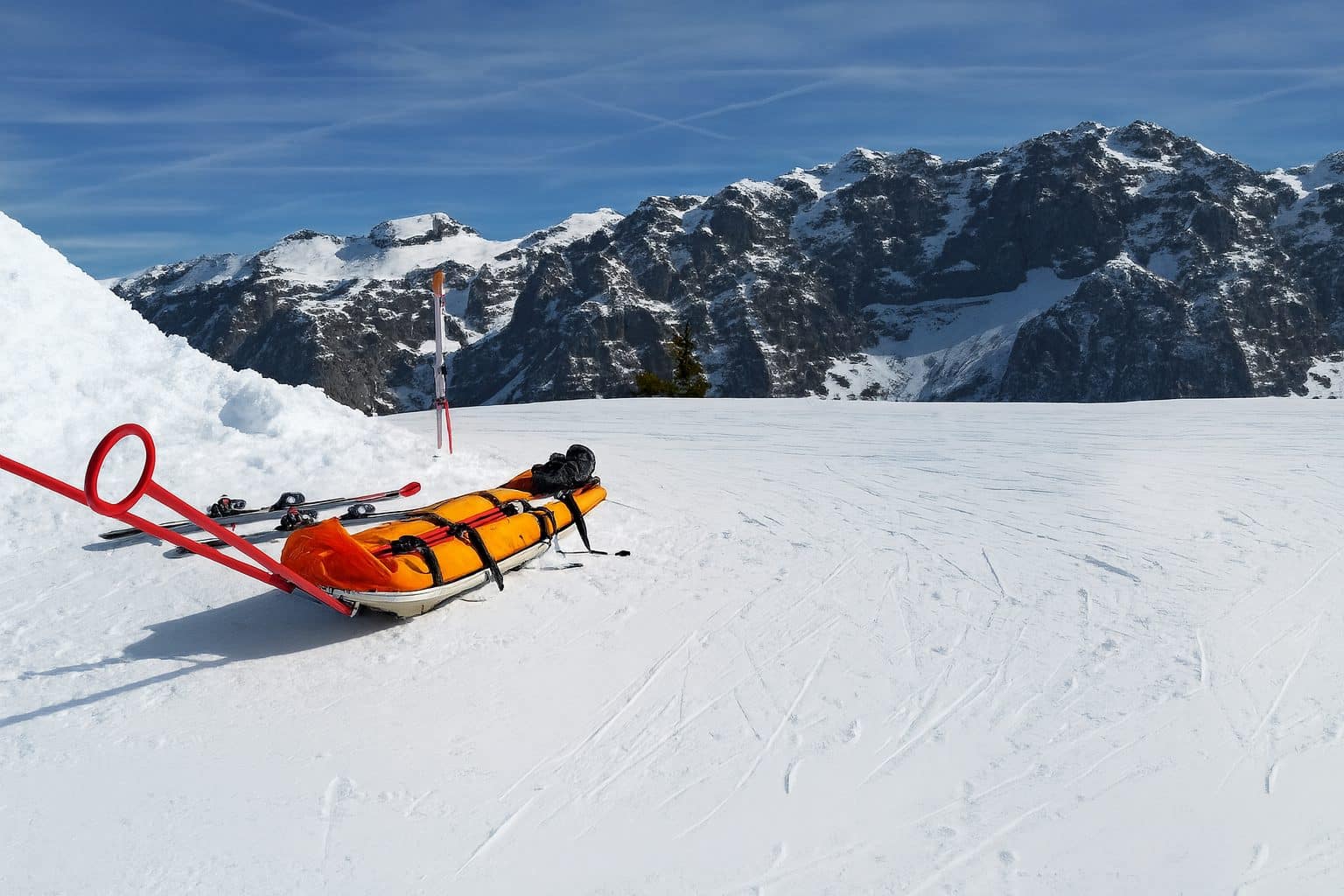
If you cannot descend without assistance, ask the ski patrollers: they are trained to immobilize the knee and transport you by sled. In case of a serious accident, call the emergency services. 144 in Switzerland or the 112 In France. If you suspect a fracture, do not remove the shoe yourself: let the emergency services assess it.
First aid once at the bottom
Rest, ice wrapped in a cloth for 15 to 20 minutes several times a day, and elevating the leg: these simple measures will reduce swelling and pain. First aid is detailed in our article. knee injury while skiing.
Should you have your knee examined while at a ski resort?
If you experience knee pain while skiing, a visit to the doctor's office is helpful to rule out a fracture with an X-ray and to protect your knee with a brace and crutches. For a sprain or suspected ligament injury, this is often enough to return home safely and then seek further medical attention in Geneva.
An on-site consultation is essential if the knee is deformed or if the kneecap appears dislocated, if you cannot put weight on your foot or take a few steps, or if the pain is very intense. A leg that becomes cold, pale, or numb is an absolute emergency, as is a wound on the knee: in these situations, immediate treatment is necessary.
What you need to ask before leaving the resort
The report and the images
If you have your knee examined at a ski resort, request a written report of the consultation, including the suspected diagnosis and the procedures performed. Also, obtain the X-rays on CD, USB drive, or via a download link. These documents save considerable time during your consultation in Geneva and often prevent the need for repeat examinations.
The splint, the walking sticks, and the prescriptions
If a brace is placed on your knee at a ski resort, ask how long you should wear it and if you can remove it at night. Crutches are helpful as soon as putting weight on the leg becomes painful. Finally, keep all prescriptions, especially if you were prescribed medication to prevent deep vein thrombosis (DVT) while your leg is immobilized.
Returning to Geneva: when and how?
If the X-ray shows no fracture and the knee is protected, you can usually go home and see a specialist within a few days. A ligament rupture, even if confirmed, does not require immediate surgery: if surgery is necessary, it is scheduled a few weeks later.
During the journey, sit as a passenger with your leg extended and take regular breaks to walk around. Wiggle your toes and ankles, and drink plenty of fluids: prolonged immobility increases the risk of deep vein thrombosis (DVT). A calf that becomes swollen, hot, or painful should be seen by a doctor promptly. Do not drive while your knee is painful, unstable, or immobilized in a brace, especially if it is your right knee.
The most common knee injuries in skiing
In skiing, the knee is most often affected by twisting movements while wearing skis. The most frequent injury is...’sprain of the medial collateral ligament (MCL), typical of a snowplow. Next comes the anterior cruciate ligament rupture, often after a fall backwards or a jump landing, and the meniscus tears.
A violent fall at high speed can also cause a tibial plateau fracture, whereas a simple shock most often results in a knee contusion. Only a medical examination, supplemented if necessary by imaging, can make the difference.
Mistakes to avoid
After a knee injury at a ski resort, the first mistake is to continue skiing on a painful or unstable knee, hoping it will heal on its own. The second is to remove the brace too soon because the pain is subsiding: a ligament takes several weeks to heal, even when it no longer hurts.
Finally, avoid hastily agreeing to non-urgent surgery far from home. Unless it's a displaced fracture or a circulatory problem, take the time to return home and seek the advice of a knee specialist, who will also provide follow-up care and rehabilitation.
The consultation in Geneva
Upon returning from a knee injury at a ski resort, the specialist examines the joint, reviews the X-rays taken at the resort, and requests, if necessary, a Knee MRI. The goal is to make an accurate diagnosis and decide on the treatment best suited to your age, activity level, and sporting objectives.
Most knee injuries sustained at ski resorts can be treated without surgery, using a brace, crutches, and physiotherapy. If surgery is necessary, it can be scheduled calmly in Geneva: see, for example, the anterior cruciate ligament surgery on Dr. Coulin's website. When surgery is necessary, it is generally scheduled a few weeks later, once the swelling in the knee has subsided. This gives you time to be well-informed before making a decision. Dr. Coulin sees patients from Switzerland, neighboring France, and abroad.
Key takeaways
A knee injury sustained at a ski resort almost never requires surgery on site. To manage the situation effectively, remember these few tips:
- Stop skiing and call for help if your knee gives way or is very painful;
- to have an X-ray taken at the resort to rule out a fracture;
- leave with a report, the images, a splint and crutches if needed;
- consult a knee specialist in Geneva within the week following your return.
After a knee injury at a ski resort, these simple steps allow you to get home safely and then choose the right treatment, without rushing.
Frequently Asked Questions
Do I need to have the surgery done at the resort?
Rarely. Immediate surgery is only necessary in cases of displaced fracture, dislocation that doesn't realign, or circulatory problems in the leg. A ligament rupture, however, requires planning: you have time to go home and consult a knee specialist before making a decision.
Can I drive home with a leg brace?
Yes, as a passenger, with your leg extended and taking regular breaks. However, do not drive while your knee is painful, unstable, or immobilized in a brace, especially if it's your right knee.
Does my insurance cover treatment at the resort?
This depends on your insurance and the country where the resort is located. Check with your health insurance provider or accident insurer, and keep all invoices, prescriptions, and medical reports: you will need them for reimbursement.
How soon can I get a consultation in Geneva?
Ideally, within the week following your return. Sooner if the knee is very swollen, locked, if it gives way when walking, or if the pain increases instead of decreasing.
Do I need to have more X-rays done in Geneva?
Not always. If the images taken at the resort are of good quality and you have them with you, they may be sufficient. The specialist then decides whether an MRI is necessary.
I live in neighboring France or abroad: can I consult in Geneva?
Yes. Dr. Coulin receives patients from Switzerland, neighboring France and abroad, with support for administrative procedures if necessary.
Injured your knee while skiing? Consult a doctor in Geneva.
Dr. Coulin, an orthopedic surgeon specializing in the knee, receives patients in Geneva from Switzerland, neighboring France and abroad, to make the right diagnosis and offer appropriate treatment.
Make an appointment or call the +41 22 348 80 00.