

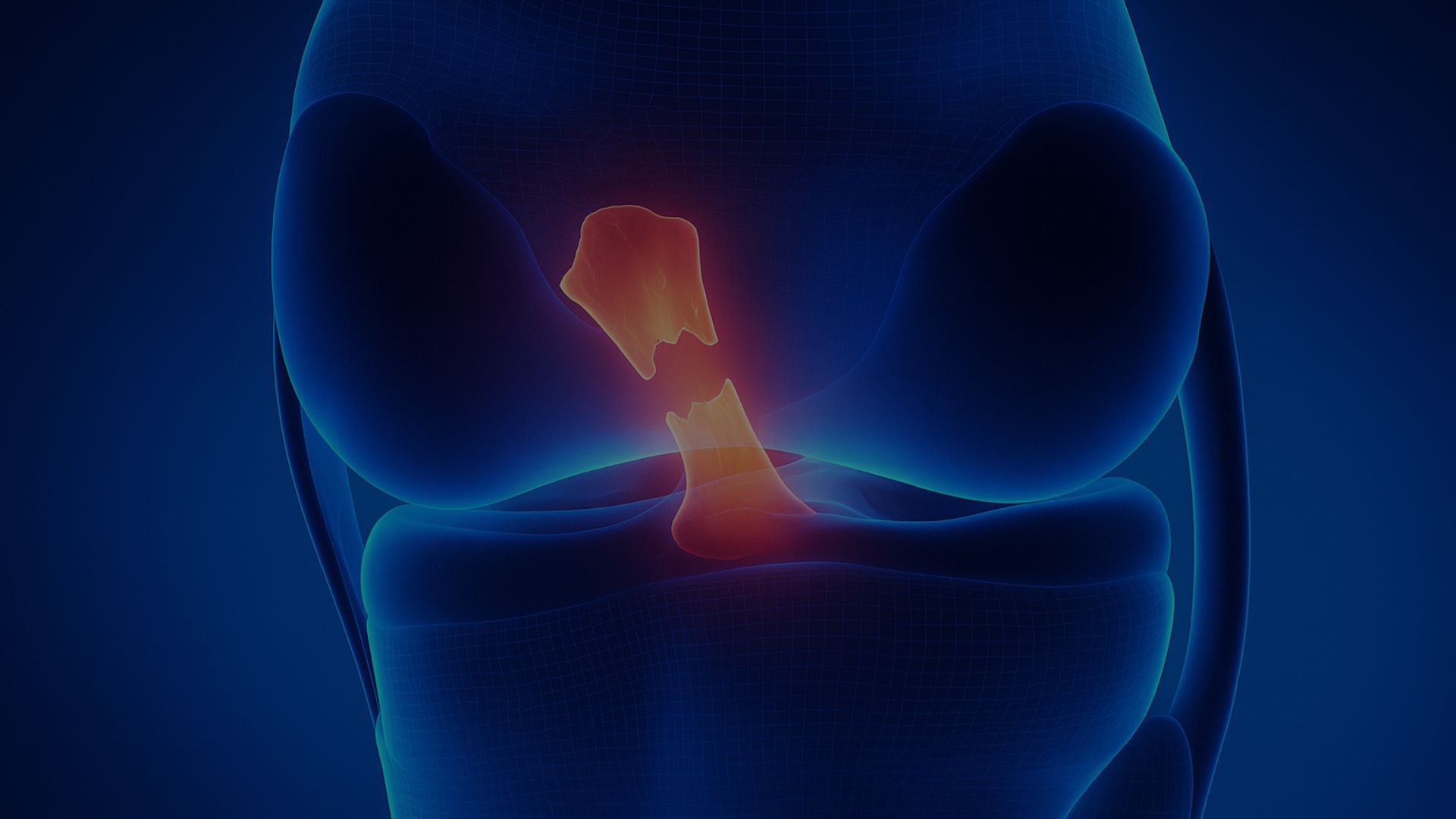
What is anterior cruciate ligament (ACL) surgery ?
The anterior cruciate ligament is essential for knee stability, especially during pivoting movements, changes of direction, or sudden stops. When this ligament is torn, the knee can become unstable, painful, and severely limit sports or certain professional activities.
Anterior cruciate ligament surgery aims to replace the damaged ligament with a tendon graft. The goal is to restore joint stability and prevent the onset of associated injuries such as meniscal or cartilage damage. When performed properly and combined with appropriate rehabilitation, this surgery allows for a safe and lasting return to mobility.
When should you consider ACL surgery?
Surgery is not always necessary after an anterior cruciate ligament rupture. The choice depends on several factors:
- The patient's activity level (athletic or not).
- Functional discomfort felt on a daily basis.
- The presence of associated lesions (menisci, cartilage), visible on MRI.
- The effectiveness or not of conservative treatment (physiotherapy).
It is generally recommended:
- In young or athletic patients wishing to resume pivotal activities (football, skiing, handball, basketball, etc.).
- In case knee instability in daily life.
- If the MRI reveals associated lesions.
- When rehabilitation alone does not allow normal function to be restored.
Dr. Coulin takes the time to assess each situation through a complete clinical examination, imaging tests and an in-depth discussion with the patient about their mobility goals.
How does the procedure with Dr. Coulin take place ?
Anterior cruciate ligament reconstruction surgery most often relies on an autograft (tissue taken from the patient). The tendons used may be:
- The hamstrings,
- The patellar tendon,
- Or the quadriceps tendon.
The procedure is performed arthroscopically, allowing for precise movements through small incisions. Appropriate fixation implants hold the graft in place within the bone, respecting the biomechanics of the knee.
This technique minimally invasive It reduces post-operative pain and promotes faster recovery. The goal is to replicate the function of the original ligament as closely as possible, restoring joint stability and the patient's confidence in their knee.
What are the post-operative consequences ?
After anterior cruciate ligament surgery, the post-operative period is carefully managed:
- Light immobilization may be prescribed initially.
- Partial and then full loading is generally permitted quickly.
- Rehabilitation begins in the first few days, under the supervision of a specialized physiotherapist.
The objectives of rehabilitation are multiple:
- Gradually regain full knee mobility.
- Strengthen muscles, especially the quadriceps and hamstrings.
- Re-educate proprioception (perception of movements) and coordination.
Resuming sport is done in stages, generally between 6 and 12 months after the operation, depending on the discipline practiced and the patient's progress.
What results can we expect ?
When properly indicated and followed by rigorous rehabilitation, anterior cruciate ligament surgery yields excellent results:
- A stability restored of the knee.
- A smooth walk, without apprehension.
- The possibility of returning to sport safely in the majority of cases.
However, success also depends on the patient's motivation to follow their rehabilitation program and respect the recovery steps.
Expert and personalized support
A rupture of the anterior cruciate ligament is not simply a torn ligament. It exposes the knee to other risks, such as meniscal lesions or theearly osteoarthritis if instability persists.
Dr. Coulin adopts a comprehensive approach, which takes into account:
- The selection of the most suitable graft,
- Surgical precision thanks to arthroscopy,
- Post-operative monitoring and personalized rehabilitation.
Its objective is to ensure lasting stability of the knee and a safe return to activities, whether sporting or professional.
Have you torn your cruciate ligament or is your knee still unstable ?
Dr. Coulin will see you for a consultation in Geneva to establish a precise diagnosis, analyze your examinations and suggest an appropriate treatment strategy.
Whether it is conservative treatment or anterior cruciate ligament surgery, each decision is personalized to offer the patient the best possible recovery.