

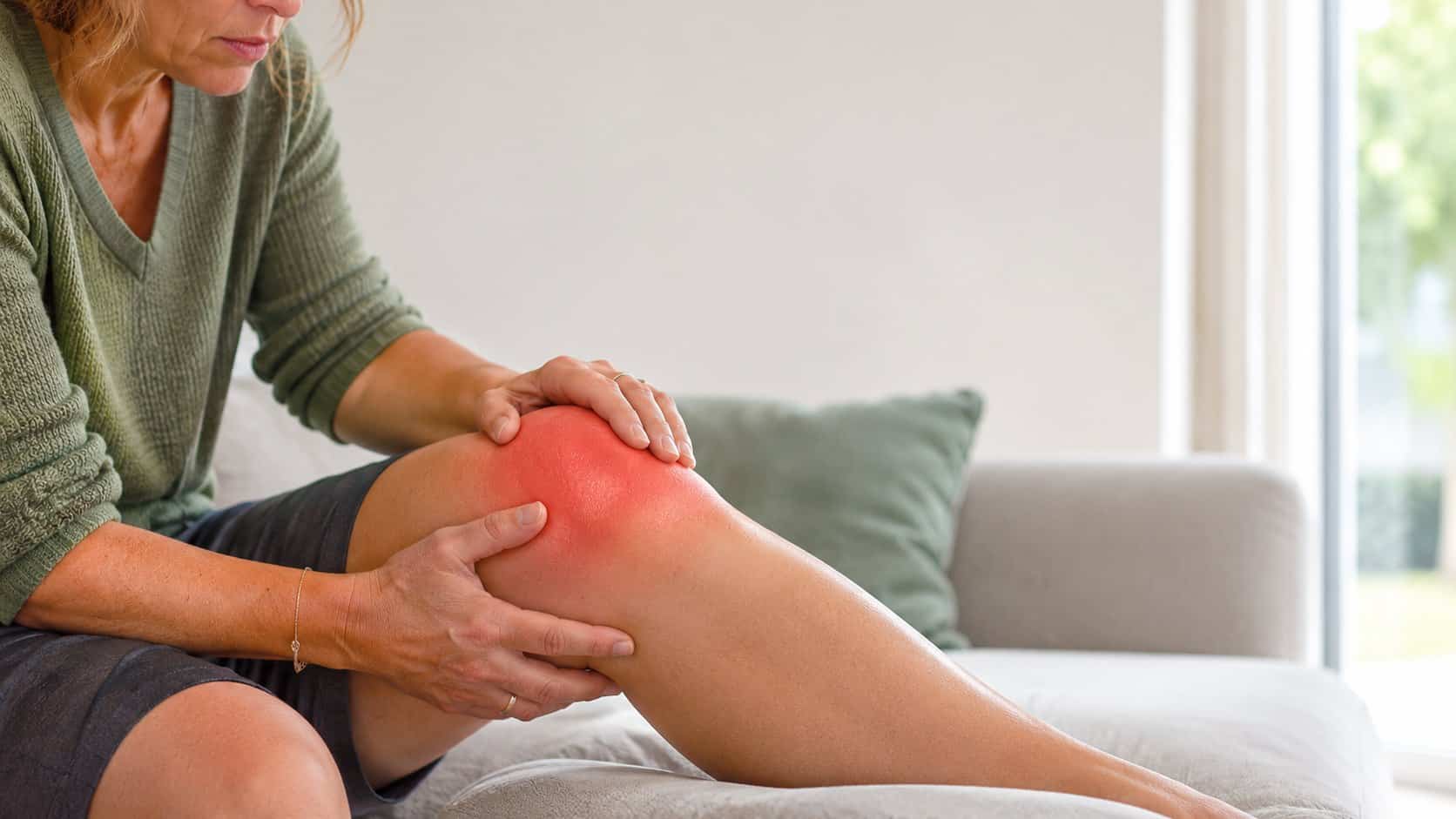
A hot, red, and swollen knee: a sign to be taken seriously
A hot, red, and swollen knee indicates inflammation. This can be superficial, under the skin, or located inside the joint. While most causes are benign, one of them, a joint infection, is an emergency that should not be delayed.
This picture differs from swelling after exertion or a fall, without redness or heat: see Knee swelling after exercise.
To help diagnose the problem, two questions are useful: is the entire knee swollen, or just a bump in front of the kneecap? Can the knee still be bent? A joint that hardly bends at all suggests an issue inside the knee, which should be examined quickly.
Possible causes of a hot knee
1. Prepatellar bursitis
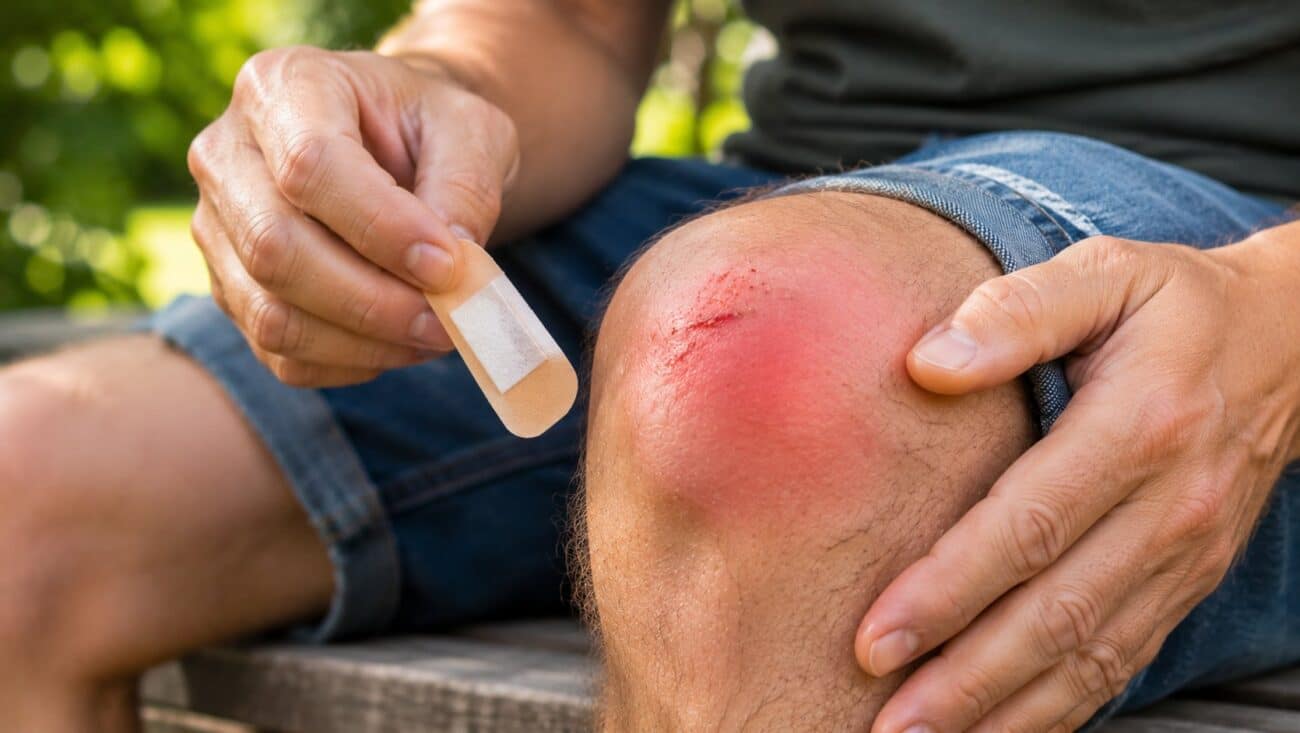
This is inflammation of the small fluid-filled sac located in front of the kneecap. It appears after repeated kneeling (tiling, gardening, housework) or an impact. A soft, well-defined bump is visible in front of the kneecap. The knee usually bends normally.
If the lump becomes red, hot and very painful, especially after a small wound, the bursa may be infected and requires prompt treatment.
2. Septic arthritis: an emergency not to be missed
This is an infection inside the joint. The entire knee is swollen, hot, and very painful, making it nearly impossible to bend or walk. Fever is common, but not always present. Without prompt treatment, the infection can destroy the cartilage within days.
3. Gout and chondrocalcinosis
Crystals can form in the joint, triggering a sudden inflammatory attack, often at night: the knee becomes red, hot, swollen, and extremely painful. The symptoms resemble an infection, hence the importance of an examination.
4. A skin infection (cellulitis)
Redness and heat spread to the skin around the knee, sometimes originating from a small cut or sting. The joint itself may not be swollen.
5. A flare-up of osteoarthritis or an inflammatory disease
Osteoarthritis can experience flare-ups with swelling and moderate heat. Some rheumatic diseases also cause repeated effusions.
Hot knee: when is it an emergency?
See a doctor the same day, or go to the emergency room, if:
- the entire knee is swollen, hot and very painful;
- you can no longer bend your knee or put your foot down;
- You have a fever or chills;
- a wound, a puncture or a recent infiltration is nearby;
- you have a knee replacement, diabetes or a treatment that weakens the immune system;
- The redness spreads rapidly.
In Geneva you can book an urgent appointment. In case of high fever with a general feeling of being unwell, call 144.
How is the diagnosis made?
When faced with a hot knee, a clinical examination can distinguish between skin, bursa, or joint involvement. If there is any doubt about an infection or crystals, the doctor will perform a... puncture : the doctor takes a small sample of fluid from the knee with a fine needle for analysis. This is the key test.
A blood test (inflammation, uric acid), an ultrasound or an X-ray often complete the assessment.
The procedure is quick and performed during a consultation, with local anesthesia if needed. It often relieves pain by removing excess fluid. Laboratory analysis looks for microbes and crystals, and immediately guides treatment: antibiotics in case of infection, treatment for the acute attack in case of gout or chondrocalcinosis.
What treatment?
The treatment for a hot knee depends on the cause found during the examination:
- simple bursitis : rest, cold, avoid kneeling, sometimes a puncture; antibiotics if it is infected;
- septic arthritis : antibiotics and joint irrigation, most often by arthroscopy, urgently;
- gout or chondrocalcinosis : anti-inflammatory treatment of the attack, then prevention of recurrences;
- cellulite : antibiotics.
In all cases, the knee is immobilized for the duration of the attack, then mobility is gradually restored, sometimes with the help of a physiotherapist. In the event of a joint infection, hospitalization is generally necessary to administer antibiotics intravenously; treatment then continues with tablets for several weeks. For a bursitis who returns despite precautions, a minor intervention can be discussed to remove the purse.
What should I do while waiting for the consultation?
While waiting to be examined, a few simple steps can relieve a hot knee:
- rest your knee and elevate your leg;
- apply cold through a cloth;
- Do not massage or heat the knee;
- Avoid taking anti-inflammatory drugs before seeing a doctor if an infection is possible: they can mask the signs.
If you feel feverish, take your temperature. Trace the outline of the redness with a pen: you'll easily see if it's spreading. If you work on your knees, stop. And if the symptoms worsen in the following hours (increasing pain, fever, inability to bend the knee), don't wait for your scheduled appointment: seek urgent medical attention. Finally, avoid massaging the knee, applying heat, or trying to pop a bump yourself: these actions can worsen an infection. Note the time the first symptoms appeared, your temperature, and any medications you've taken: this information helps the doctor quickly decide whether aspiration or antibiotic treatment is necessary.
Frequently Asked Questions
Key takeaways
Here are the key points to remember about hot knee syndrome:
- A hot, red and swollen knee indicates inflammation, either superficial or joint-related;
- Bursitis causes a bump in front of the kneecap, with the knee bending normally;
- A swollen, very painful entire knee, with or without fever, should raise suspicion of an infection: consult a doctor on the same day;
- Fluid sampling is the test that allows us to make a definitive diagnosis.
If you have any doubts, have your hot knee examined quickly: in Geneva, you can make an emergency appointment.